The Complete Guide to Outdoor Furniture Materials: Sourcing from China
Here’s a question that comes up a lot in conversations with furniture buyers, hoteliers, and interior designers: “I want to source outdoor furniture from China, but I’m confused about the materials. What should I choose for durability, style, and cost?”
The answer depends on your specific needs—climate, usage, design aesthetic, and budget. Understanding the properties of each material is the first step to making a smart sourcing decision. China, as the world’s largest furniture exporter, offers an extensive range of options, from classic teak to modern synthetic resins.
This guide provides a detailed overview of the most common outdoor furniture materials, their pros and cons, and practical advice on sourcing them from China.
Table of Contents
Why Material Choice Matters for Outdoor Furniture
Outdoor furniture faces a unique set of challenges: sun, rain, wind, temperature fluctuations, and heavy use. The right material ensures your investment lasts, looks good, and provides comfort. The wrong choice can lead to rapid deterioration, high maintenance costs, and dissatisfied customers.
When sourcing from China, you have access to a vast array of materials. Key factors to consider include:
- Durability: How well does it withstand weather, UV rays, and physical wear?
- Maintenance: How much time and expense is required to keep it looking good?
- Aesthetics: Does it match the desired design style (modern, classic, rustic)?
- Comfort: Is it pleasant to sit on in different temperatures?
- Cost: What is the initial investment and long-term value?
- Weight: Is it easy to move and rearrange, or does it need to be stable in wind?
An In-Depth Look at Outdoor Furniture Materials
Below is a comprehensive breakdown of the most popular materials used in outdoor furniture manufacturing in China.
1. Teak Wood
Teak is the gold standard for outdoor wood furniture. Its high natural resin and oil content make it exceptionally resistant to water, rot, insects, and warping.
- Pros:
- Exceptional all-weather durability.
- Natural beauty and warm colour.
- Low maintenance (cleaning and occasional oiling).
- Long lifespan (can last 50+ years with care).
- Resistant to cracking, warping, and decay.
- Cons:
- Higher initial cost compared to other woods.
- Colour fades to a silver-grey patina over time if not treated.
- Requires occasional oiling to maintain the original golden-brown colour.
- Sourcing sustainable, certified teak is important.
- Best For: Premium residential and commercial projects where longevity and aesthetic appeal are paramount.
2. Wrought Iron
Wrought iron is known for its exceptional strength, durability, and classic, ornate designs. Each piece is often hand-forged, offering a unique, elegant look.
- Pros:
- Extremely strong and sturdy.
- Excellent stability in windy conditions due to its weight.
- Timeless, sophisticated aesthetic.
- Highly durable and long-lasting.
- Cons:
- Heavy and difficult to move.
- Prone to rust without regular maintenance and protective coatings.
- Can become very hot in summer and cold in winter.
- Higher cost due to material and craftsmanship.
- Best For: Elegant, traditional outdoor settings, such as garden benches, bistro sets, and decorative pieces in protected areas.
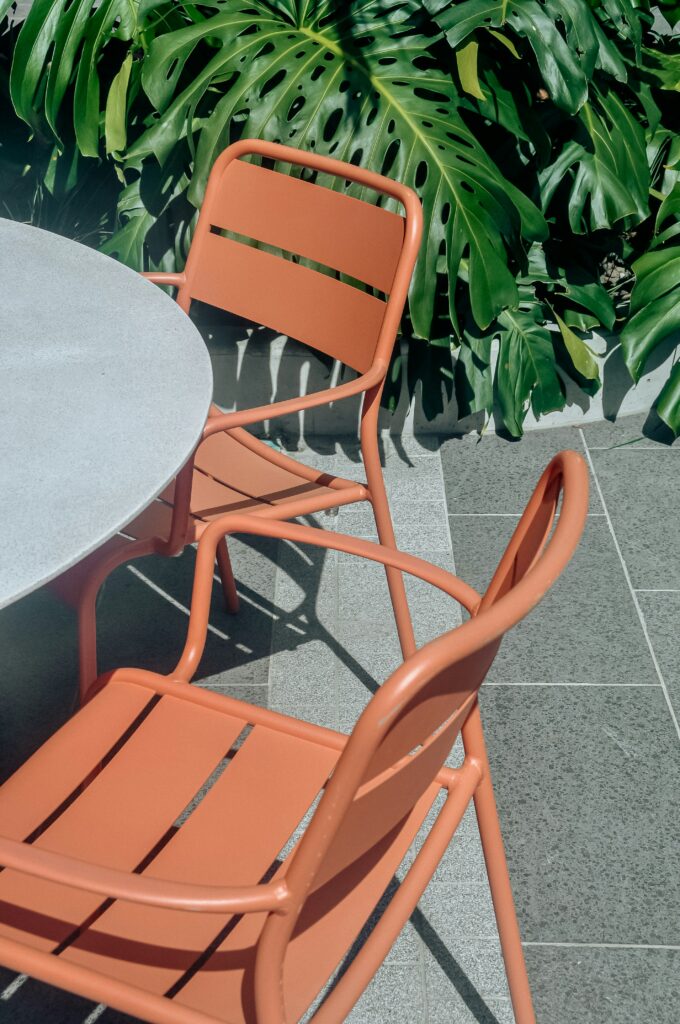
3. Aluminum
Aluminium is a lightweight, rust-resistant metal that has become a staple in modern outdoor furniture. It is often finished with a powder coating for added durability and colour.
- Pros:
- Lightweight and easy to move and rearrange.
- Naturally resistant to rust and corrosion.
- Low maintenance (simply wipe clean).
- Cost-effective and widely available.
- Available in a wide variety of styles and colours.
- Cons:
- Can be easily moved or blown away in strong winds.
- Can become hot in direct sunlight and cold in low temperatures.
- May dent or scratch more easily than steel.
- Best For: Casual, modern outdoor settings, poolside furniture, balconies, and any area where furniture is frequently moved.
4. Steel (Stainless & Galvanised)
Steel offers a robust, contemporary look. While regular steel requires protection from rust, galvanised or stainless steel options provide superior weather resistance.
- Pros:
- Highly durable and strong.
- Can withstand heavy use.
- Available in a variety of colours and finishes.
- Often made from recycled materials (eco-friendly).
- Easy to clean and maintain.
- Cons:
- Heavy and cumbersome to move.
- Prone to rust unless galvanised or made of stainless steel.
- Can be temperature sensitive (hot in summer, cold in winter).
- Stainless steel options can be expensive.
- Best For: Contemporary, minimalist designs, commercial settings requiring high durability, and areas with less extreme weather (if coated).
5. Synthetic Resin and Plastic
Synthetic materials like high-density polyethene (HDPE), polypropylene, and all-weather wicker (resin wicker) are incredibly popular for their durability, weather resistance, and low maintenance.
- Pros:
- Highly resistant to moisture, UV rays, and mildew.
- Lightweight and easy to move.
- Requires minimal maintenance (just soap and water).
- Cost-effective.
- Available in a wide range of styles, colours, and textures.
- Often made from recycled materials.
- Cons:
- Lightweight and can be blown away in high winds (may need anchoring).
- Can become hot in direct sunlight (though some materials are designed to mitigate this).
- May fade over extended exposure to intense UV without UV stabilisers.
- Some may find the look less “natural” than wood or metal.
- Best For: Family-friendly outdoor spaces, pool areas, coastal environments (no rust), and budget-conscious projects.
Comparison Table of Outdoor Furniture Materials
| Material | Durability | Maintenance | Weight | Weather Resistance | Cost | Best For |
|---|---|---|---|---|---|---|
| Teak Wood | Excellent | Low-Medium | Medium | Excellent (rot/insect resistant) | High | Premium residential, high-end commercial |
| Wrought Iron | Excellent | High | Heavy | Good (needs rust treatment) | Medium-High | Classic, elegant designs in protected areas |
| Aluminum | Good | Low | Light | Very Good (rust-proof) | Low-Medium | Modern, casual, portable settings |
| Steel (Coated) | Good | Medium | Heavy | Good (requires coating) | Medium | Contemporary, industrial, heavy-duty |
| Synthetic Resin | Very Good | Very Low | Light | Excellent (UV/moisture resistant) | Low-Medium | Family, coastal, budget-friendly, high-traffic |
A Step-by-Step Guide to Sourcing Outdoor Furniture Materials from China
Once you’ve chosen your materials, the next step is sourcing them effectively.
Step 1: Define Your Project Requirements
- Material: Wood, metal, or synthetic? (Refer to the guide above.)
- Design and Style: Have clear specifications, sketches, or reference images.
- Quality Standards: What certifications or quality levels are required?
- Quantity: Estimate your order volume to understand MOQs.
- Budget: Determine your target price range, including shipping and duties.
Step 2: Research and Identify Suppliers
- Locate Manufacturing Hubs: Foshan, Guangzhou, and Zhejiang province are major centers for all types of furniture and materials.
- Use Online Platforms: Alibaba, Global Sources, and Made-in-China are good starting points.
- Attend Trade Fairs: Events like the Canton Fair provide direct access to manufacturers and products.
- Work with a Sourcing Partner: A company like We Do Import can streamline the process.
Step 3: Vet and Verify Suppliers
- Check Credentials: Ask for business licenses and factory photos.
- Request Samples: This is essential to verify material quality, finish, and craftsmanship.
- Conduct Factory Audits: Ensure the supplier has the capabilities and quality control processes they claim.
- Ask the Right Questions:
- “Can you provide test reports or material certifications?”
- “What is your quality control process?”
- “What packaging do you use to prevent shipping damage?”
- “Do you have experience exporting to our market?”
Step 4: Order Samples and Test
- Order Samples: Get a physical sample of the furniture made with your chosen material.
- Test Thoroughly: Assemble the piece (if required), check for stability, finish quality, and comfort.
- Check for Weather Resistance: If possible, test the sample’s resistance to water, UV light, and scratches.
Step 5: Negotiate and Finalise Terms
- Pricing and Payment Terms: Negotiate the best price and agree on payment milestones (e.g., 30% deposit/70% before shipment).
- Lead Time: Ensure the production timeline fits your schedule.
- Packaging: Clearly specify packaging requirements for export.
- Incoterms: Agree on shipping terms (e.g., FOB, CIF).
Step 6: Quality Control and Inspection
- Pre-Production Meeting: Discuss quality expectations with the manufacturer.
- In-Process Inspection: If possible, have the production monitored.
- Pre-Shipment Inspection (PSI): This is non-negotiable. Hire a third-party inspector or your sourcing partner to check the goods against your sample and specifications before they leave the factory.
Step 7: Manage Logistics and Shipping
- Choose a Freight Forwarder: Coordinate the shipment.
- Prepare Documentation: Ensure all documents (Commercial Invoice, Packing List, Bill of Lading) are accurate.
- Calculate Total Landed Cost: Include product cost, shipping, insurance, and import duties.
How We Do Import Can Help You
Sourcing outdoor furniture materials from China involves navigating a complex landscape of suppliers, materials, and logistics. As a professional sourcing partner, We Do Import simplifies this entire journey.
We provide a full-service solution covering:
- Supplier Identification & Vetting: We find reliable manufacturers that match your specific material and quality requirements.
- Due Diligence & Factory Audits: We verify supplier credentials and production capabilities.
- Sample Management: We coordinate the sampling process and shipping.
- Price Negotiation: We secure competitive pricing and favourable terms on your behalf.
- Quality Control & Inspections: We conduct rigorous pre-shipment inspections to ensure your order meets the highest standards.
- Logistics & Customs Support: We handle shipping coordination, documentation, and compliance.
Our expertise ensures you get the right material, from the right factory, at the right price, without the risks and headaches of doing it alone.
Frequently Asked Questions
What is the most durable material for outdoor furniture?
Teak wood and synthetic resins like HDPE are among the most durable. For metals, stainless steel and aluminum (with powder coating) offer excellent durability.
Which material requires the least maintenance?
Synthetic resin and aluminium require very little maintenance—just occasional cleaning with soap and water.
Is teak furniture worth the higher cost?
Yes, for projects where longevity and premium aesthetics are important. Its exceptional durability and low maintenance needs make it a sound long-term investment.
Can I customise outdoor furniture materials in China?
Absolutely. Chinese manufacturers offer extensive customisation options, including specific wood finishes, powder coating colours for metals, and a wide range of resin colours and weaves.
What is the most cost-effective material for outdoor furniture?
Aluminium and synthetic resins generally offer the best balance of durability, weather resistance, and affordability.
Final Thoughts
Sourcing outdoor furniture materials from China gives you access to a world of possibilities. Whether you need the timeless elegance of teak, the classic strength of wrought iron, the modern versatility of aluminium, or the durable practicality of synthetic resins, there is a perfect material for your project.
The key to success lies in understanding the materials, defining your needs, finding a reliable supplier, and implementing strict quality control measures. With the right strategy and partner, you can source beautiful, durable outdoor furniture that delights your customers and stands the test of time.
Ready to source your outdoor furniture materials? Contact We Do Import today to discuss your project. We’ll help you navigate the complexities and bring your vision to life.

Leave a Reply